Small businesses often face a common challenge when competing with larger companies: limited resources. While larger organizations may have dedicated customer service departments, sales representatives, and marketing teams, smaller businesses frequently rely on a handful of employees to manage customer inquiries, generate leads, and handle daily operations.
This can create disadvantages when potential customers expect immediate answers, convenient communication, and quick responses to their questions.
Artificial intelligence (AI) chatbots are helping change that dynamic.
By integrating an AI-powered chatbot into their websites, small businesses can provide instant assistance, capture potential leads, and automate routine customer interactions without significantly expanding their staff.
AI chatbots give small businesses access to communication and lead-generation capabilities that were once more commonly associated with larger organizations.
Providing Immediate Responses to Website Visitors
One of the biggest advantages larger companies often have is the ability to respond quickly to customer inquiries.
They may employ dedicated customer service representatives, operate call centers, or maintain extended support hours.
Small businesses, on the other hand, may not have someone available to respond to every inquiry throughout the day.
An AI chatbot can help address this challenge by providing immediate responses to common questions.
For example, a website visitor might want to know:
- What services does the company provide?
- Which geographic areas does the business serve?
- What are the company’s operating hours?
- How can I request an estimate?
- Does the business offer a particular service?
- How do I contact the appropriate department?
A properly configured AI chatbot can answer many of these questions using information from the company’s website and approved business resources.
This allows visitors to receive useful information without waiting for a staff member to become available.
Capturing Leads Outside Normal Business Hours
Potential customers do not always visit websites during regular business hours.
A homeowner may research roofing contractors in the evening. A business owner might compare service providers over the weekend. A purchasing manager may investigate logistics companies after normal office hours.
Without an immediate way to engage these visitors, businesses may miss opportunities to collect important contact information.
An AI chatbot can remain available around the clock, helping visitors find relevant information and encouraging them to submit an inquiry.
Depending on its configuration, the chatbot may collect:
- Name and contact information
- Company name
- Type of service needed
- Geographic location
- Project details
- Preferred contact method
- Anticipated project timeline
The information can then be delivered to the business through email notifications, a customer relationship management (CRM) platform, or another connected system.
Although the chatbot cannot replace every sales conversation, it can help ensure that inquiries are captured even when employees are unavailable.
Helping Small Businesses Qualify Leads More Effectively
Generating website leads is important, but not every inquiry represents a good business opportunity.
Some visitors may be searching for services the company does not provide, while others may be outside its geographic service area.
AI chatbots can help qualify prospects by asking relevant questions before passing their information to the sales team.
For example, a roofing company’s chatbot might ask whether the homeowner needs roof repair or replacement, where the property is located, and when the work is needed.
A warehousing company’s chatbot might ask about the type of inventory, preferred warehouse location, and estimated storage requirements.
This information helps employees understand the prospect’s needs before initiating a conversation.
It can also reduce the amount of time spent responding to inquiries that do not match the company’s services.
For small businesses with limited sales resources, improving lead quality can be just as valuable as increasing the number of leads.
Delivering a More Professional Customer Experience
Customers often evaluate a business based on their experience with its website.
A website that provides clear information, easy navigation, and convenient communication can help establish credibility.
AI chatbots can contribute to this experience by guiding visitors to relevant information and answering questions without requiring them to search through multiple pages.
For example, a visitor researching a home improvement project may not know which service page contains the information they need.
Instead of navigating through the website, they can ask the chatbot a question and receive a response based on the company’s available content.
A well-designed chatbot can also direct visitors to relevant service pages, resources, contact forms, and other website features.
This creates a more interactive experience while helping customers find information efficiently.
However, the chatbot should be transparent about being an AI assistant and provide a clear option to contact a person when additional help is needed.
Reducing Repetitive Customer Service Tasks
Small business owners and employees frequently spend time answering the same questions.
These may involve operating hours, service availability, appointment procedures, pricing policies, or general company information.
While these questions are important to customers, responding individually to every inquiry can consume valuable staff time.
AI chatbots can automate many routine interactions.
Common examples include:
- Explaining available services
- Providing business hours and contact information
- Answering frequently asked questions
- Directing visitors to service pages
- Explaining how to request an estimate
- Providing general appointment information
- Sharing relevant policies and procedures
By handling straightforward inquiries, chatbots allow employees to focus more attention on complex customer needs, sales opportunities, and daily business operations.
The objective is not to eliminate personal service but to use automation where it provides practical value.
Supporting Multiple Services Without a Larger Support Team
Many small businesses offer several services, each with different requirements.
A contractor may provide roofing, siding, and gutter installation. A logistics company may offer warehousing, distribution, fulfillment, and transportation coordination.
Website visitors may have questions about any of these services.
An AI chatbot connected to accurate website content can help provide information across multiple service categories.
For example, a visitor to a contractor’s website might ask whether the company installs seamless gutters or handles emergency roof repairs.
The chatbot can respond based on the services the company actually offers.
This helps businesses communicate a broader range of capabilities without requiring a separate employee to answer questions about every service.
It is important that chatbot responses are based on verified information rather than assumptions about what the company provides.
Integrating AI Chatbots With Existing Business Systems
One of the most useful features of modern AI chatbot platforms is their ability to connect with other business applications.
Depending on the platform, chatbots may integrate with:
- CRM systems
- Email marketing platforms
- Appointment scheduling tools
- Contact forms
- Customer support systems
- Marketing automation platforms
- Live chat applications
For example, a chatbot inquiry can be transferred into a CRM, where the business can assign it to a sales representative and track the opportunity.
A chatbot may also connect with a scheduling platform to help visitors request appointments, provided the integration supports that functionality.
These connections can reduce manual data entry and help businesses organize incoming inquiries.
For smaller companies, integrating communication and lead management systems can provide efficiencies without requiring a large administrative team.
Combining AI Chatbots With Live Chat
Although AI chatbots can answer many questions, there are situations where human assistance is necessary.
A customer may have a complex service request, a sensitive concern, or a question that requires a customized response.
Combining AI chatbots with live chat provides an opportunity to offer both automated and personal assistance.
A typical process might involve:
- The chatbot greeting the visitor
- Answering initial questions
- Collecting relevant information
- Identifying when human assistance is needed
- Transferring the conversation to an available representative
When no representative is available, the chatbot can collect contact information for follow-up.
This hybrid approach allows small businesses to provide convenient automated assistance while maintaining personal customer relationships.
Using AI Chatbots Across Different Industries
AI chatbots can be adapted to the needs of different businesses.
The most effective implementation depends on the services offered and the types of questions customers typically ask.
Roofing and Home Improvement Contractors
Contractors can use chatbots to answer service questions, explain geographic coverage, and collect information about potential projects.
A chatbot might help a homeowner identify the appropriate inquiry process for roof repair, replacement, or gutter installation.
Warehousing and Logistics Companies
Logistics providers can use chatbots to explain available warehousing services, facility locations, and specialized capabilities.
They can also collect preliminary information from importers, distributors, and manufacturers seeking storage or fulfillment services.
Professional Service Businesses
Professional service providers can use chatbots to answer common questions, explain available services, and direct visitors to appropriate contact or appointment options.
Nonprofit Organizations
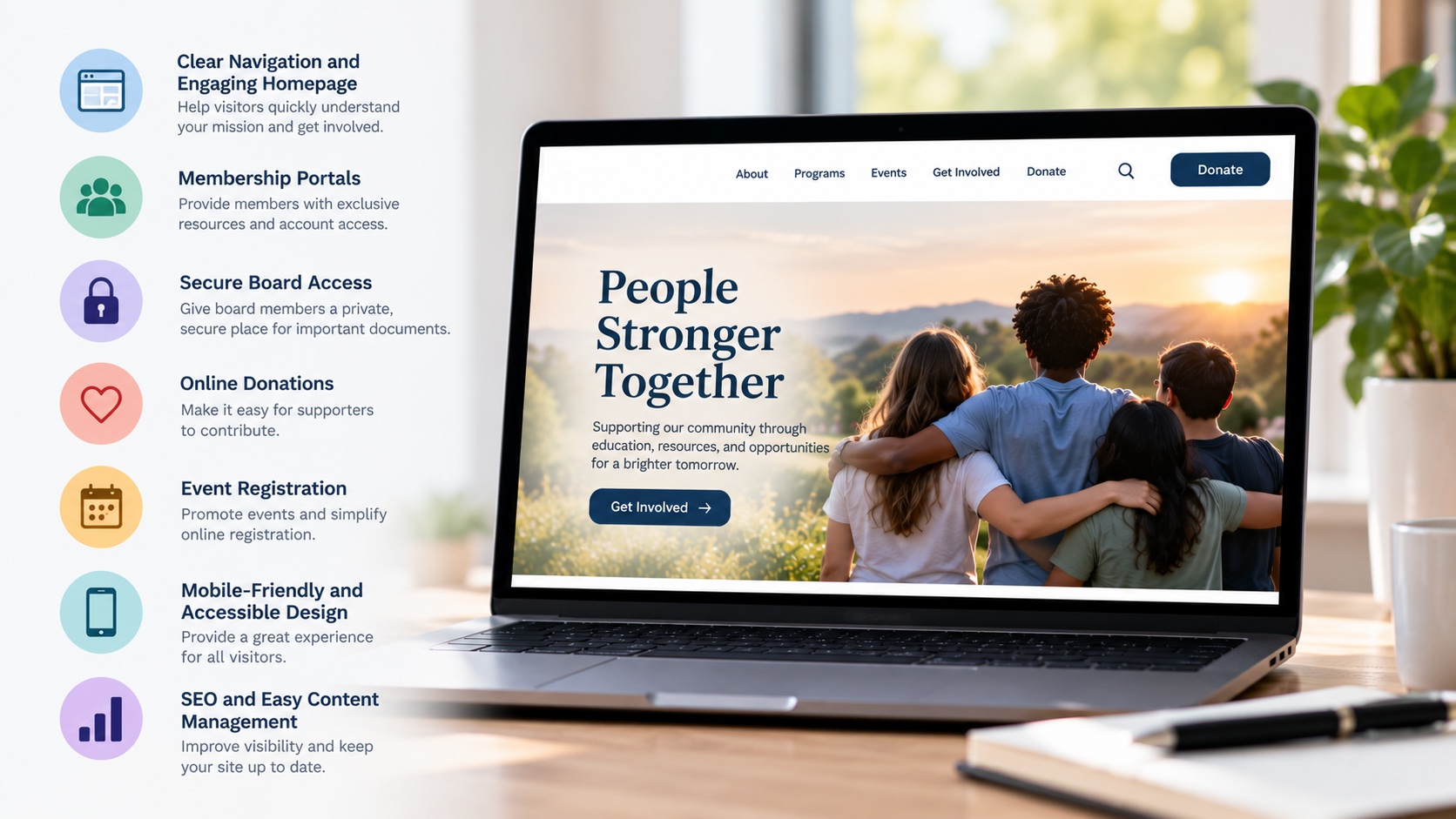
Nonprofits can use chatbots to help visitors find membership information, learn about programs, locate event registration pages, and access public organizational resources.
For each industry, the chatbot should be configured around the organization’s actual services, workflows, and communication needs.
AI Chatbots Can Support Website Conversion Optimization
Many businesses invest in search engine optimization, Google Ads, and other digital marketing strategies to attract visitors to their websites.
However, generating traffic does not guarantee that visitors will become leads.
Some visitors may leave because they cannot find the information they need or are not ready to complete a traditional contact form.
An AI chatbot creates another opportunity for engagement.
Instead of requiring every visitor to navigate to a contact page, the chatbot can answer questions and introduce a relevant next step.
For example, someone visiting a roofing service page may ask about the company’s service area before requesting an estimate.
A chatbot that answers that question accurately and offers an appropriate contact option can help move the visitor toward an inquiry.
Chatbots do not automatically improve conversion rates. Their effectiveness depends on their accuracy, placement, conversation design, and relevance to visitor needs.
Businesses should evaluate actual results rather than assuming that adding a chatbot will increase leads.
Training an AI Chatbot With Your Business Information
An AI chatbot is only as useful as the information and instructions supporting its responses.
Businesses should provide accurate, current information about their services, policies, locations, and customer procedures.
Depending on the chatbot platform, this may involve connecting website pages, uploading approved documents, or configuring a knowledge base.
Useful information includes:
- Service descriptions
- Frequently asked questions
- Business locations and service areas
- Operating hours
- Contact procedures
- Appointment or estimate processes
- Relevant policies
- Product or service limitations
The chatbot should also be instructed how to handle questions it cannot answer confidently.
Rather than inventing information, it should acknowledge uncertainty and direct visitors to an appropriate contact option.
Regular reviews and updates help maintain response quality as business information changes.
What Small Businesses Should Consider Before Adding a Chatbot
AI chatbots offer useful capabilities, but they require planning and ongoing oversight.
Before implementation, businesses should consider several factors.
Business objectives: Determine whether the primary goal is lead generation, customer service, appointment requests, or website navigation.
Content accuracy: Make sure the chatbot has access to reliable information and does not make unsupported promises.
Human assistance: Establish a process for transferring complex inquiries to an employee.
Privacy and security: Review how customer information is collected, stored, and shared with connected systems.
Website experience: Configure the chatbot so it does not obstruct important content or interfere with mobile navigation.
Ongoing maintenance: Review conversations, update information, and refine responses when necessary.
Cost: Evaluate platform subscriptions, integration expenses, setup requirements, and ongoing management.
A chatbot should solve a clearly defined business problem rather than being added simply because AI technology is popular.
Measuring the Value of an AI Website Chatbot
Small businesses should evaluate chatbot performance using metrics that reflect their objectives.
Useful measurements may include:
- Number of chatbot conversations
- Qualified leads collected
- Contact information submissions
- Conversations transferred to employees
- Common customer questions
- Website conversions influenced by chatbot interactions
- Staff time saved on routine inquiries
- Sales opportunities generated
For example, a chatbot that handles hundreds of conversations but produces few useful inquiries may need adjustments to its responses or lead qualification process.
Similarly, a chatbot that generates a smaller number of highly relevant leads may provide significant value.
Connecting chatbot activity with website analytics and CRM data can help businesses better understand its contribution to marketing performance.
Helping Small Businesses Compete Through Smarter Technology
Larger companies may have more employees and greater marketing budgets, but small businesses can often respond quickly to changing customer needs and implement new technology with fewer organizational obstacles.
AI chatbots provide an opportunity to combine that flexibility with automated customer communication.
By answering common questions, capturing after-hours inquiries, qualifying leads, and integrating with existing business systems, chatbots can help smaller organizations provide a more responsive website experience.
They also allow employees to focus on activities that require personal attention and professional expertise.
For businesses looking to improve their digital marketing performance, AI chatbots can become a useful component of a broader strategy that includes website design, SEO, paid advertising, and conversion optimization.
AI Chatbot Solutions for Small Businesses
At 4Site Media Group, we help businesses improve their online presence through website development, search engine optimization, digital advertising, and marketing automation.
AI-powered website chatbots can complement these services by helping businesses engage visitors, answer questions, and capture potential leads.
From chatbots that reference website content and approved business resources to custom conversation flows, CRM integrations, and live chat options, the right solution depends on each company’s goals and customer communication requirements.
Whether you’re looking to improve lead generation, provide after-hours assistance, or reduce repetitive customer inquiries, an AI chatbot may help your business deliver a more responsive online experience.
Contact 4Site Media Group to discuss how an AI-powered website chatbot can support your customer service and digital marketing objectives.